 EN
EN  SE
SE 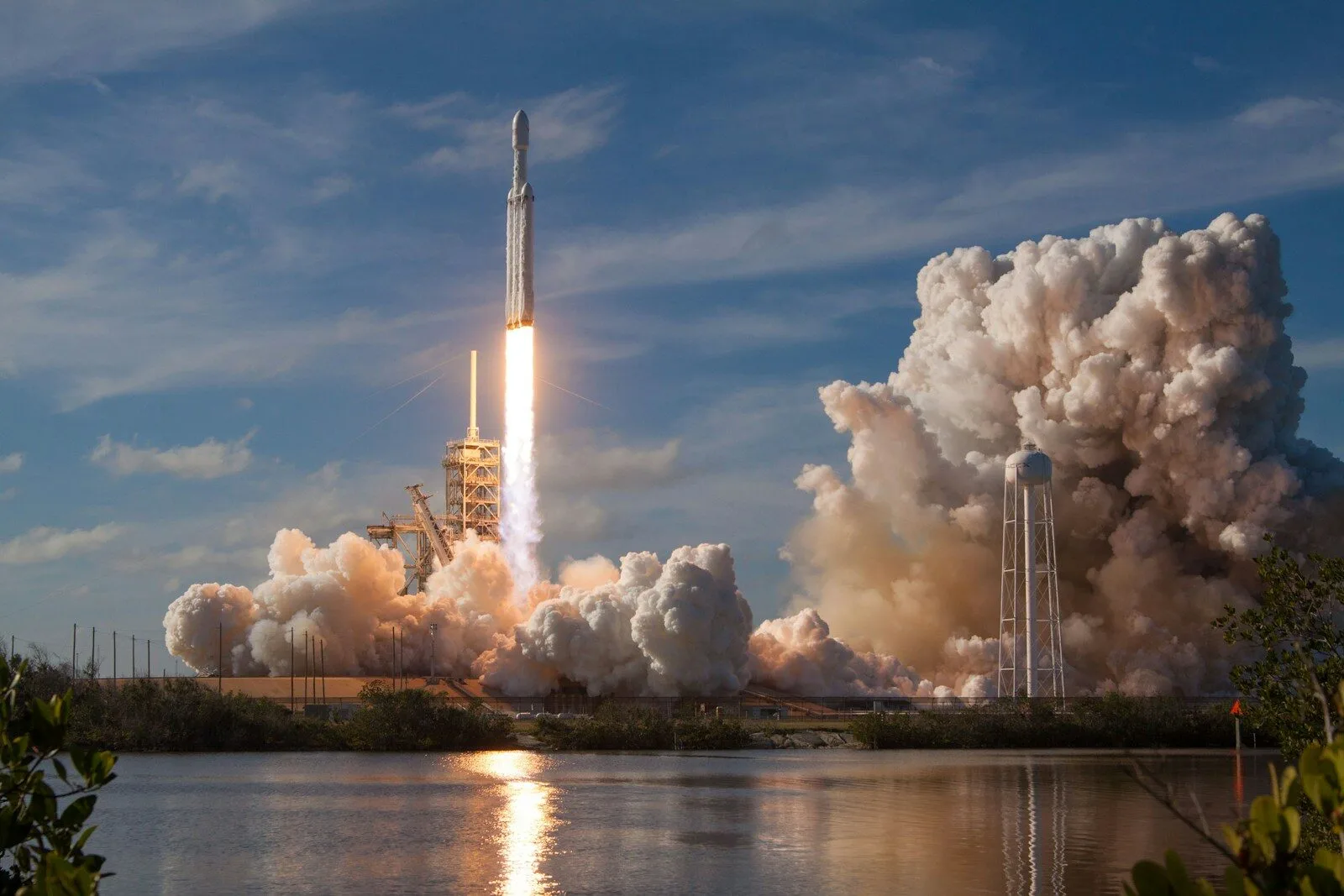
SpaceX, the largest IPO in history, is drawing significant capital and attention to an industry that has long been built in silence. The signaling value is great and Finserve Global Defence & Security Fund, which has invested in the sector since the fund's inception in 2019, sees the start of a new global era that encompasses broad sectors of society and extends beyond individual companies.
It is in conflicts and wars that space technology has advanced its positions in the last two years. In both Ukraine and the Middle East, the ability to detect, track and act against a target in seconds has become increasingly important. Here, modern, secure and resilient satellite infrastructure is absolutely crucial. Stefan Gustafsson has extensive experience of both military operations and European space strategy after 30 years as a military leader and more than a decade as a strategist in European space. Today, he is a senior advisor to Finserve Global Defence & Security Fund.
”"The demand is broad in the sector and will increase. Everyone needs this type of capacity. In several niches, Europe has developed technology that the world did not demand until now. And the demand is already strong, all modern defense forces need the new capabilities," says Stefan Gustafsson. The technology already exists, ready to be built into larger systems," says Stefan Gustafsson.
”"The signal value is stronger for the sector as a whole than for any individual company. For investors, it is less about individual winners and more about identifying more broadly those companies that have the right technology, capacity and conditions to take advantage of the growing demand," says Joakim Agerback, responsible manager of Finserve Global Defence & Security Fund.
Speed and cost outweigh perfection
In Ukraine, command and control was built on available, commercial systems. It wasn't elegant, but it was fast and cheap. And it worked. In the Middle East, many were surprised by the use of cheap drones that caused great damage, both to infrastructure and to much more expensive weapons systems. The asymmetry is total.
To detect and respond in the extremely short timescales required to be effective, communication needs to be fast and secure. The information must be accurate, and a decision made in a matter of seconds cannot wait for someone to verify the data afterwards.
This requires satellites that collect data and communicate with low latency. Satellites are needed that can see, that can penetrate clouds and see in the dark with both cameras and radar. And that can be quickly reoriented. The last thing is tricky: most satellites move so slowly that a small change in course can take a long time, so faster control technology is a niche in itself. In addition, the data needs to be processed and distributed to the right user. None of the parts are enough on their own. It is when they are connected that they become valuable. Such integration of systems over large distances requires fast and secure connectivity. These various technical parts are already in Europe, ready to be used.
Europe is lagging behind in pace, not technology
The cost of a single launch has fallen by more than 80 percent in ten years, driven by reusable rockets, new business models and methods borrowed from the automotive industry. Here Europe finds it difficult to compete. Europe is buying American launch capacity, and if it continues, it will finance a dependency that Europe says it wants to break.
The US is moving in the opposite direction. A new defense procurement strategy is speeding up regulations and opening up new companies with government contracts, while attracting foreign technology companies to the US market. The result is that capital and capabilities are moving westward while Europe's ambitions have to navigate slow bureaucratic processes, both within countries and within the EU.
At the same time, much of the innovation is in small, fast-moving companies. Gustafsson points out the difference between European and American thinking: European companies think in terms of platforms and programs, American ones in systems of systems, where existing technology is put together for new purposes. And it happens quickly, driven by strong competition and simpler regulations.
Europe has cards to play
But there are bright spots. In several critical areas, European companies are technologically ahead, driven by the US market, while they wait for European demand to catch up. One company that built a faster propulsion system for satellites saw its turnover more than double in a year when business models were adapted and, together with superior technology, created new international demand. In secure satellite communications and satellite-based SAR radar, there are European companies that were ready when the need became apparent due to ongoing wars. The technology was in place. The buyers came late, when the needs became so obvious that the bureaucracy could no longer keep up. The lessons learned in Europe are now being implemented at an ever-increasing pace, which gives confidence for the future.
Space security has gone from being an issue that is primarily the concern of states and institutions. But the threats have increased. What happens if someone, for example, sends a rocket that releases debris into low orbit, where most satellites are located, just to sabotage? The issue of space security has moved from defense agencies to the startup sector, industry and finance. It drives investment and rapid implementation of technical protection and countermeasures where the power of innovation is strong.
A disciplined approach to values
Just because capital is flowing in doesn't mean that any price is justified. SpaceX's valuation doesn't leave much room for anything other than exceptional growth and high margins over the long term.
”"The bigger opportunity doesn't lie in this individual listing. It lies in the broader space economy it helps to strengthen. We prefer a diversified exposure to the entire structural trend," says Joakim Agerback.
The long-term movement towards own, sovereign space capabilities in Europe and Asia should not be underestimated, says Stefan Gustafsson. Both Europe and Asia have niche technology companies with very high potential. They may not challenge the position of the leading players in the foreseeable future, but can gradually create a more diversified and competitive ecosystem. The global security policy macro trends, together with the development of space technology, create structural conditions for long-term growth in an industry that has long been undervalued outside the US. For an investor with patience, this is the development that is worth following.
—
Stefan Gustafsson is a strategic advisor to Finserve Global Defence & Security Fund. The fund has holdings in the space and defence sectors discussed in the article.
This is marketing communication and does not constitute investment advice. Please read the fund's prospectus and key information document before making any investment decisions. Past performance is no guarantee of future performance. The money invested in the fund can both increase and decrease in value and it is not certain that you will get back all of the capital invested.