 EN
EN  SE
SE 
Negotiations on Iran have continued throughout May, and all parties are clearly seeking to avoid a full-scale regional war. But are the risks really decreasing? We don't think so. The conflict has already shifted from military confrontation to something much more comprehensive: a stress test of the international order in which energy, the defense industry, inflation and great power politics are intertwined. The question of whether Iran can be pushed back militarily is no longer at the center. Instead, the crucial question is how the conflict changes the balance of power between the United States, Europe and China. And whether the West has the industrial endurance to handle simultaneous crises in the Middle East, Europe and the Indo-Pacific.

Everything points to a movement away from an isolated war in the Middle East towards what can rather be categorized as a catalyst for a new global security order.
US dominance but growing burden
Militarily, the US still has the upper hand. No other player can match the US ability to project air and naval power in a short period of time. What is being tested, however, is something more difficult to measure: endurance. Winning a single operation and maintaining a global strategic presence over years are two different things.
Modern high-intensity conflicts consume advanced weapons systems at a rate that the Western defense industry is not designed for. When replenishment times are measured in years rather than months, the question arises whether the United States can really handle several major conflicts in parallel. Here the connection to China becomes central. Every Patriot system protecting allies in the Middle East is a system that is not available to Taiwan. Every aircraft carrier group in the Persian Gulf is a group that is not patrolling the South China Sea. The United States finds itself in a multi-front dilemma with the Middle East, Ukraine, and Taiwan competing for the same logistical and industrial capacity.
The burden is also economic. Energy prices, defense spending, and stubborn inflation are creating a heavier macroeconomic situation. The question for Washington is whether the American economy can bear the cost of protracted great-power competition without domestic policy starting to falter.
Europe's second energy shock
If the US challenge is military endurance, Europe's is geoeconomic. The continent's greatest vulnerability is more structural than military. When the Strait of Hormuz is destabilized, the entire cost structure of European industry is affected, not least energy prices. And this comes after several years of already high defense spending linked to Ukraine. The Iran conflict risks becoming a second energy shock in a short time.
The heavy industrial economies of Central Europe are particularly vulnerable. Germany and Italy are dependent on a stable energy supply and are sensitive to rising costs in transport, chemicals, steel and manufacturing. Even before a new shock from the Strait of Hormuz, EU electricity prices for energy-intensive industry were more than double those in the US and almost 50 percent above China's level (IEA, Electricity 2026). When energy prices are pushed up at the same time as defense spending grows, a gap arises between security policy and economic stability.
The conflict also exposes the divisions within the EU and NATO. Eastern Europe still sees Russia as the primary threat. Several southern European countries instead prioritize energy prices and social stability. The result is a union that is economically strong but politically fragmented. Sweden has a relative advantage through nuclear power and fossil-free electricity production. But because Swedish industry is tightly integrated into European supply chains, this advantage is limited in practice by weaker demand, higher shipping costs and raw material shortages.
China's strategy without battle
China has acted with great caution in the conflict, but this should not be confused with passivity. Beijing is balancing two interests at the same time: avoiding regional destabilization that threatens Chinese energy supplies, and allowing the United States to tie up resources far from the Indo-Pacific. The longer Washington is forced to keep its focus on the Strait of Hormuz, the less attention and capacity is left for Taiwan. China does not need to win the conflict militarily to improve its position. It is enough for the United States and Europe to be forced to burn economic and military resources in a protracted conflict environment while China positions itself as a more stable diplomatic and economic counterpart for countries in Asia, the Middle East, and the global south.
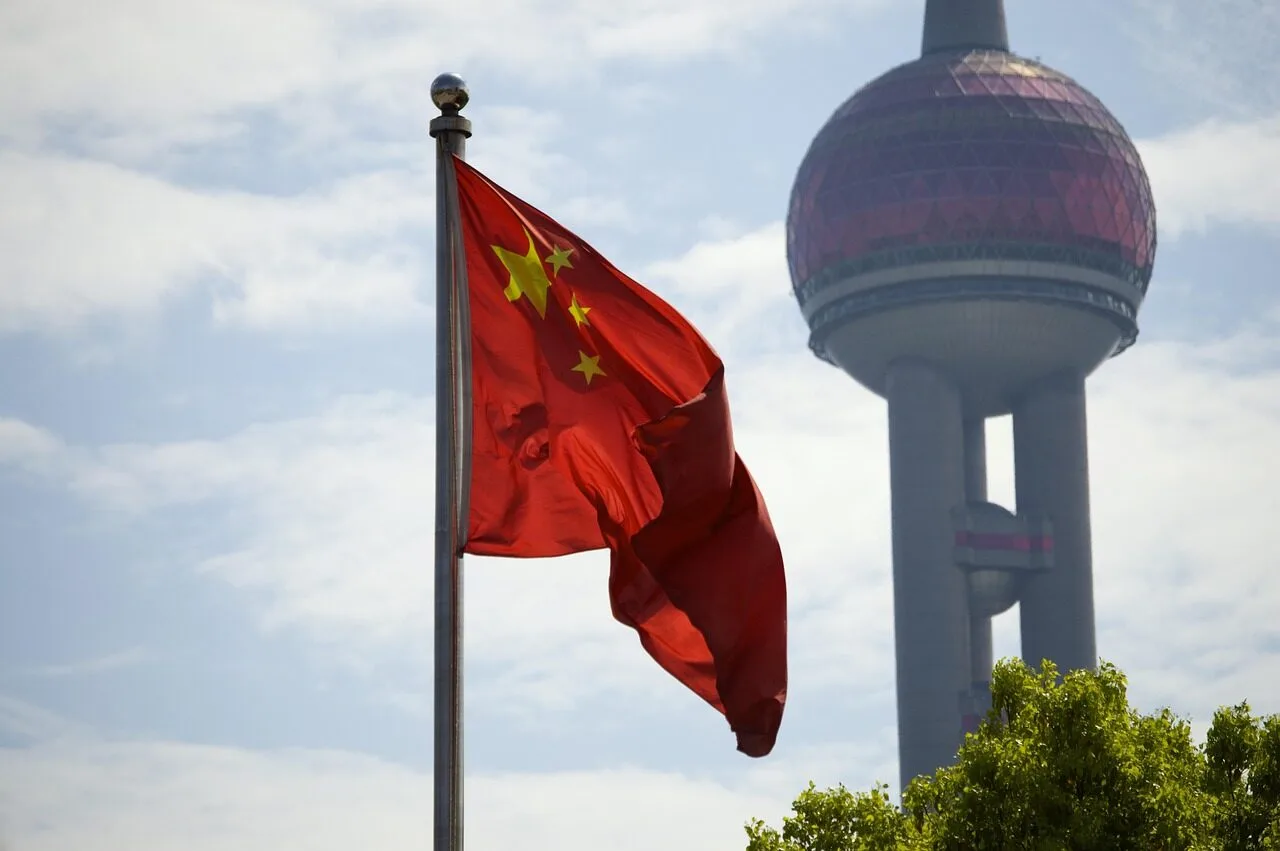
The conflict has also accelerated China's long-term work to reduce dependence on Western systems. Energy security, alternative payment solutions and regional trade networks are gaining increased strategic weight. Control over industrial value chains and technological systems is at least as crucial for Beijing as traditional military power. Taiwan can be seen as a kind of hub in this calculation. As long as the US is forced to spread its resources globally, time is working in China's favor. This gives China strategic value in that the Middle East remains unstable enough to tie up American capacity, but not so unstable that Chinese energy supplies collapse. The strategy against Taiwan follows the same logic: military deterrence is combined with political and economic influence with the aim of advancing positions without having to take the risks of direct intervention.
So while the West deals with the immediate crisis, China builds long-term strength through technology, industrial capacity, and economic resilience. Sun Tzu would have recognized the logic: The highest art of war, he wrote, is to defeat the enemy without fighting.
Pain in a global nerve
The biggest lesson from the conflict around the Strait of Hormuz is how quickly a regional security crisis can tip into a global economic systemic risk. The Strait has never been just a geographical passage. It is one of the central nerves of the world economy, and when uncertainty there grows, energy prices, shipping costs, insurance premiums and financial markets react within hours.
The biggest effects are probably the indirect ones. The conflict affects the availability of LNG, fertilizer and helium, raw materials. Absolutely crucial for industry, agriculture and high-tech production. The result is that states and companies re-evaluate the foundations of globalization. Efficiency is replaced by redundancy, just-in-time by warehousing, lowest possible cost by security of supply.
The lasting consequence is the pricing of risk. Even with gradual de-escalation, there is much evidence that geopolitical risk will be valued as a permanent cost item in the global economy, not as a temporary surcharge. For investors, this means that defense, energy infrastructure and critical raw materials move from cyclical sectors to structural positions in the portfolio.
Asymmetry as strategy
Iran has shown that a militarily inferior actor can create significant strategic effect through asymmetric methods. Cyberattacks, sabotage, drone swarms, impact on critical infrastructure and information operations cost a fraction of a conventional offensive but can significantly increase the economic and political costs to the adversary.
The logic is to make it expensive to sustain a war. For Europe, this means that the threat landscape becomes more diffuse but at the same time more constant. Civilian objects such as ports, energy systems, telecommunications, water supplies are now strategic targets to make the conflict costly.
Strategic conclusions
- The US remains the dominant military actor but is burdened by a growing multi-front dilemma.
- Europe is economically strong but energy-wise vulnerable and politically divided.
- China appears to be the actor that is most consistently trying to convert Western resource exhaustion into long-term strategic advantage.
- The crucial question is whether the West can maintain economic stability, industrial capacity and political cohesion in a world where security policy, trade, energy and technology are merging.
Strategic context & author
Joakim Agerback (Portfolio Manager) and Karl Engelbrektson (Head of Advisory Board) leads the Finserve Global Security Fund, which has a strategic focus on long-term geopolitical developments and their consequences for financial markets and global trade flows.
The report analyzes how the conflict over Iran and the Strait of Hormuz is changing the balance of power between the United States, Europe and China.
The focus is on the long-term structural consequences for energy, trade, the defense industry and global economic stability, not on short-term military developments.
The assessment is based on open sources reported in the appendix.
Disclaimer
This report is prepared for informational and analytical purposes and does not constitute investment advice, financial recommendation or a call to make investments or strategic dispositions. Assessments, analyses and conclusions in the report are based on open sources, available information and the authors' strategic and macroeconomic assessments at the time of preparation.
Geopolitical and security policy conditions can change rapidly, which may affect the report's relevance and conclusions over time.
Historical developments, scenario assessments and strategic analyses do not constitute a guarantee of future outcomes. The reader is responsible for interpretations based on the content of the report.